
7 Smart Ways RGV Homeowners Can Use Their Home Equity
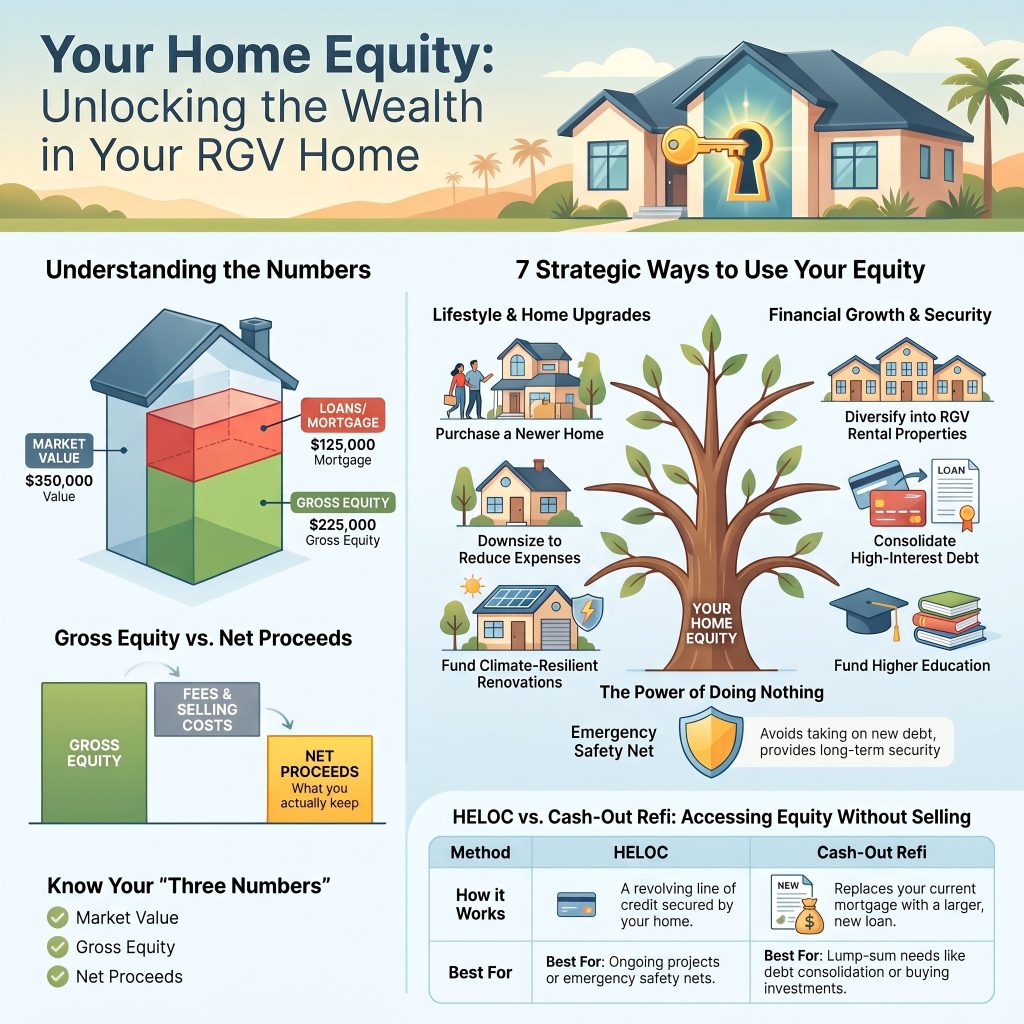
For many homeowners in the Rio Grande Valley, their home may be their largest financial asset. If you bought your home several years ago, paid down your mortgage, made improvements, or benefited from rising property values, you may have built significant home equity. The question is: What should you do with it? There is no single answer that is right for every homeowner. Some people want to move into a larger home. Others want to downsize, reduce monthly expenses, buy an investment property, renovate their current home, help their children, or strengthen their retirement plans. Some homeowners should not use their equity at all. The right decision depends on your financial position, your family, your future plans, current real estate conditions, and the amount of risk you are comfortable taking. This guide explains seven smart ways Rio Grande Valley homeowners can use their home equity, along with the potential benefits, risks, and questions you should ask before making a decision.
What Is Home Equity?
Home equity is the difference between your home's current market value and the amount you still owe on loans secured by the property. For example, imagine your home could sell for approximately $350,000 and you owe $125,000 on your mortgage. You may have about $225,000 in gross home equity. However, gross equity is not the same as the amount of money you would receive if you sold your home. If you sell, you may need to account for your mortgage payoff, closing costs, real estate brokerage fees, repairs, concessions, taxes, and other transaction expenses.
That is why homeowners should understand three different numbers:
Estimated market value: What your home may reasonably sell for in the current market.
Estimated gross equity: Your estimated market value minus loans secured by the property.
Estimated net proceeds: The approximate amount of money you may have remaining after paying your mortgage balance and selling expenses.
Understanding these numbers can help you make better decisions about your home and your future.
Why Should RGV Homeowners Pay Attention to Home Equity?
Home equity can give homeowners options. You may be able to use your equity to purchase another home, reduce your housing expenses, invest in real estate, improve your current property, pay off expensive debt, or strengthen your long-term financial position. But having significant equity does not automatically mean you should borrow against it or sell your home. Home equity is part of your personal balance sheet. Any decision involving your home should consider your income, debts, savings, taxes, retirement plans, housing needs, family situation, and long-term goals. Before making a major decision, consider speaking with the appropriate real estate, mortgage, tax, legal, and financial professionals. With that in mind, here are seven ways RGV homeowners may consider using their home equity.
- Use Your Home Equity to Buy Your Next Home
One of the most common uses of home equity is helping homeowners move into their next property.
You may want:
A larger home.
More bedrooms.
A home office.
A larger yard.
A newer property.
A different neighborhood.
Less maintenance.
A one-story home.
A property closer to family.
A home that better fits retirement.
If you have significant equity, selling your current home may provide money that can be used toward the down payment on your next property.
How This Strategy Works
Suppose your current home could sell for $400,000. You owe $150,000 on your mortgage. After paying your mortgage and estimated selling expenses, you may have significant net proceeds available. Those proceeds could potentially be used toward your next home purchase. A larger down payment may help you reduce the amount you need to finance, lower your monthly mortgage payment, avoid certain mortgage insurance requirements, or compete more effectively for the right property.
Questions to Ask Before Moving
Before selling your current home, ask:
How much is my home realistically worth?
How much do I still owe?
What are my estimated selling expenses?
How much money might I have available after the sale?
How much should I put toward my next home?
Should I sell before buying?
Could I buy before selling?
Would I need temporary housing?
Can both transactions be coordinated?
These questions should be answered before you put a sign in the yard.
Why Planning Matters
Selling and buying at the same time can be complicated. The timing of your sale, purchase, mortgage approval, closing dates, possession dates, and moving arrangements should be carefully coordinated. A written sell-and-buy strategy can help you understand your options before you make commitments.
- Downsize and Potentially Reduce Your Housing Expenses
A larger home can be valuable when it fits your lifestyle.
But your housing needs can change.
Children move away.
Unused bedrooms remain empty.
Yards require maintenance.
Pools need repairs.
Property taxes, insurance, utilities, and upkeep may become more expensive.
At some point, homeowners may ask whether keeping a larger property still makes financial and practical sense.
How Downsizing Can Use Your Equity
Imagine you sell a larger home and purchase a smaller or less expensive property. Depending on your equity position, you may be able to make a larger down payment, reduce the amount you need to borrow, purchase another property with less debt, or keep part of the proceeds for other goals. The result could be lower monthly housing expenses and less property maintenance. However, downsizing does not automatically save money.
You still need to consider:
The purchase price of your next home.
Current mortgage rates.
Property taxes.
Insurance.
Homeowners association fees.
Moving costs.
Repairs.
Closing costs.
The cost of preparing your current home for sale.
Downsizing Is More Than a Financial Decision
Many homeowners have strong emotional connections to their homes. You may have raised children there, celebrated important events, or spent decades building memories. The decision to move should not be based only on money.
Ask yourself:
Does my current home still fit my lifestyle?
How much of the property do I actually use?
How much time and money do I spend maintaining it?
Would moving closer to family, healthcare, recreation, or services improve my quality of life?
What type of home would better fit the next stage of my life?
A good downsizing plan starts with where you want to go, not with putting your current home on the market.
- Use Your Equity to Buy an Investment Property
Some homeowners may consider using their equity to help purchase an investment property.
Real estate investments can include:
Single-family rental homes.
Duplexes.
Small multifamily properties.
Commercial properties.
Land.
Vacation properties.
Other income-producing real estate.
The Rio Grande Valley includes many different real estate markets, property types, rental conditions, and investment opportunities.
But owning an investment property involves risk.
Potential Benefits
An investment property may provide:
Rental income.
Potential long-term appreciation.
Portfolio diversification.
Possible tax benefits.
A physical asset you can improve or manage.
Potential Risks
Investment property ownership may also involve:
Vacancies.
Repairs.
Property management expenses.
Insurance costs.
Property taxes.
Tenant issues.
Financing costs.
Unexpected capital expenses.
Market fluctuations.
Using home equity to invest can increase your financial exposure because your primary residence may be connected to the financing strategy.
That risk should be carefully evaluated.
Run the Numbers Before Buying
Do not buy an investment property simply because someone says it is a good deal.
Analyze:
Purchase price.
Required down payment.
Financing costs.
Expected rent.
Vacancy assumptions.
Property taxes.
Insurance.
Repairs.
Maintenance.
Property management.
Capital expenditures.
Cash flow.
Potential return on investment.
Exit strategy.
Real estate investing should be based on numbers, risk tolerance, and long-term goals.
- Improve Your Current Home
You may love your location but no longer love your house.
In that situation, improving your current property may be worth considering.
Possible improvements include:
Kitchen renovations.
Bathroom updates.
Roof replacement.
HVAC improvements.
Energy-efficiency upgrades.
Accessibility improvements.
Outdoor living spaces.
Flooring.
Additional bedrooms.
Home office space.
Will the Improvement Add Value?
Not every renovation produces a positive financial return. Before spending a large amount of money, ask three questions.
Does the Improvement Solve a Real Problem?
Replacing a failing roof is different from remodeling a kitchen because you dislike the cabinet color. Necessary repairs may protect the condition and marketability of your property. Lifestyle improvements may increase your enjoyment of the home but may not return every dollar when you sell.
Does the Improvement Fit the Neighborhood?
Over-improving a home can be risky. If comparable properties in your neighborhood sell within a certain price range, spending far more than nearby homes support may limit your potential return.
How Long Will You Stay?
A major improvement may make more sense if you plan to remain in the property for many years. If you expect to move soon, selling the home in its current condition or completing only strategic improvements may be the better option. Before starting a major renovation, consider getting a local real estate market analysis to understand how buyers in your area value similar improvements.
- Pay Off High-Interest Debt
Some homeowners consider using home equity to pay off higher-interest debt.
This may include:
Credit cards.
Personal loans.
Certain medical debts.
Other high-interest obligations.
The appeal is easy to understand.
Replacing high-interest debt with financing that has a lower interest rate may reduce interest costs or simplify monthly payments.
However, this strategy carries serious risks.
Understand What Is at Stake
Credit card debt is generally unsecured. A mortgage, home equity loan, or home equity line of credit is secured by your property. Moving unsecured debt onto your home changes the nature of the risk. If you cannot make the required payments, your home may be at risk. You should also consider whether the spending habits or financial conditions that created the original debt have been addressed. Paying off credit cards with home equity and then accumulating new credit card balances can leave a homeowner in a worse financial position.
Questions to Ask
Before using home equity to pay off debt, ask:
What interest rate am I paying now?
What will the new financing cost?
Are there closing costs or fees?
Will my monthly payment actually decrease?
How long will it take to repay the new loan?
Am I turning short-term debt into long-term debt?
Is my home being placed at greater risk?
Have I addressed the reason the debt accumulated?
A qualified financial advisor, lender, or housing counselor can help you evaluate the full financial impact.
- Strengthen Your Retirement or Long-Term Housing Plan
For many homeowners, a large percentage of their net worth is tied up in their home. That makes housing an important part of retirement planning.
Some homeowners may decide to:
Sell and downsize.
Move to a lower-cost property.
Purchase a home with less debt.
Relocate closer to family.
Sell a second property.
Keep their home and age in place.
Use certain home equity financing products.
Explore whether a reverse mortgage fits their situation.
The best strategy depends on your age, income, savings, health, family, housing needs, tax situation, and long-term goals.
Start With Your Housing Plan
Ask:
Where do I want to live over the next 5, 10, or 20 years?
Does my current home support that plan?
Can I comfortably afford the taxes, insurance, repairs, and maintenance?
Is the home suitable if my mobility or healthcare needs change?
Would moving closer to family improve my quality of life?
How much of my wealth is tied up in this property?
Would selling create more flexibility?
Avoid Making Decisions in Isolation
Selling a home to free up equity may affect your housing expenses, taxes, investments, estate plan, insurance needs, and long-term financial security. Before making a major retirement-related real estate decision, consider speaking with qualified financial, tax, legal, mortgage, and real estate professionals. The goal is not simply to access equity. The goal is to create a housing and financial strategy that supports the life you want to live.
- Keep Your Equity Where It Is
One of the smartest ways to use home equity may be not to use it.
You do not have to sell your home.
You do not have to borrow against it.
You do not have to invest it.
You do not have to renovate.
You do not have to make a major financial move simply because your property has increased in value.
If your current home fits your lifestyle, your housing costs are manageable, you have adequate savings, and your long-term plan is working, leaving your equity in the property may be a reasonable decision.
When Keeping Your Equity May Make Sense
You may prefer to leave your equity untouched if:
You are happy with your current home.
You plan to stay for many years.
Your housing expenses are manageable.
You do not need additional liquidity.
You want to avoid taking on more debt.
You have other savings and investments.
You are not comfortable increasing your financial risk.
The important point is to make the decision intentionally.
Knowing how much equity you have and understanding your options can help you decide whether staying, selling, borrowing, investing, or moving makes the most sense.
Should You Sell Your RGV Home to Access Your Equity?
Not necessarily.
Selling is only one way to make a change involving your home equity.
You may decide to stay.
You may renovate.
You may explore financing options.
You may move into another home.
You may downsize.
You may purchase an investment property.
The first step is understanding your current position.
Before deciding whether to sell, answer these questions:
What is my home realistically worth in today's market?
How much do I owe?
What would my estimated selling expenses be?
How much might I have left after selling?
Where would I move?
What would my next home cost?
How would selling affect my monthly expenses?
What are the tax implications?
What are my financial and lifestyle goals?
Once you know the answers, you can make a more informed decision.
How Do You Know How Much Equity You Have?
Online home estimates can provide a starting point, but they do not replace a property-specific market analysis.
Your home's value can be affected by:
Location.
Neighborhood.
Property condition.
Lot size.
Square footage.
Updates.
Age.
Construction quality.
Comparable sales.
Competing listings.
Current inventory.
Buyer demand.
Price range.
Market conditions.
A local real estate professional can review your property and recent market activity to help you estimate a realistic range of value. You can then compare the estimated market value with your mortgage balance and potential selling expenses. This gives you a clearer picture of your estimated equity and potential net proceeds.
What Is the Best Way to Use Home Equity?
The best way to use home equity depends on the homeowner. There is no single strategy that works for everyone. A homeowner who wants to retire within two years has different needs than a growing family. An investor has different goals than someone who wants to eliminate debt. A homeowner who plans to stay for 20 years should evaluate renovations differently from someone who expects to sell next year. The smartest decision is usually the one that fits your complete financial and housing plan.
Consider your:
Income.
Savings.
Debt.
Monthly expenses.
Family needs.
Risk tolerance.
Retirement plans.
Tax situation.
Housing goals.
Expected length of ownership.
Before borrowing against, investing, or selling a major asset, seek advice from qualified professionals who can evaluate your specific circumstances.

Address
--
Coldwell Banker Impact Properties
221 E. Van Buren, Suite 1
Harlingen, TX 78550
(956) 367-3312
LaurenHaire@ColdwellBankerImpactProperties.com
Resources
--
Sell Your Home
Buy A Home
Relocation Guide
Move Meter
Financial Calculators
Communities
--
RGV Communities
Harlingen
Brownsville
McAllen
South Padre Island


© 2023 Coldwell Banker Realty
©2022 Coldwell Banker. All Rights Reserved. Coldwell Banker and the Coldwell Banker logos are trademarks of Coldwell Banker Real Estate LLC. The Coldwell Banker® System is comprised of company owned offices which are owned by a subsidiary of Anywhere Advisors LLC and franchised offices which are independently owned and operated. The Coldwell Banker System fully supports the principles of the Fair Housing Act and the Equal Opportunity Act.
